The Challenge
Habitat Work Requires a Lighter Touch
Conservation and wildlife agencies restore the landscapes their mission exists to protect. The contractor they hire has to do the same. Conventional construction equipment compacts soil, kills vegetation, and leaves permanent access scars - exactly the damage habitat restoration projects are trying to reverse.
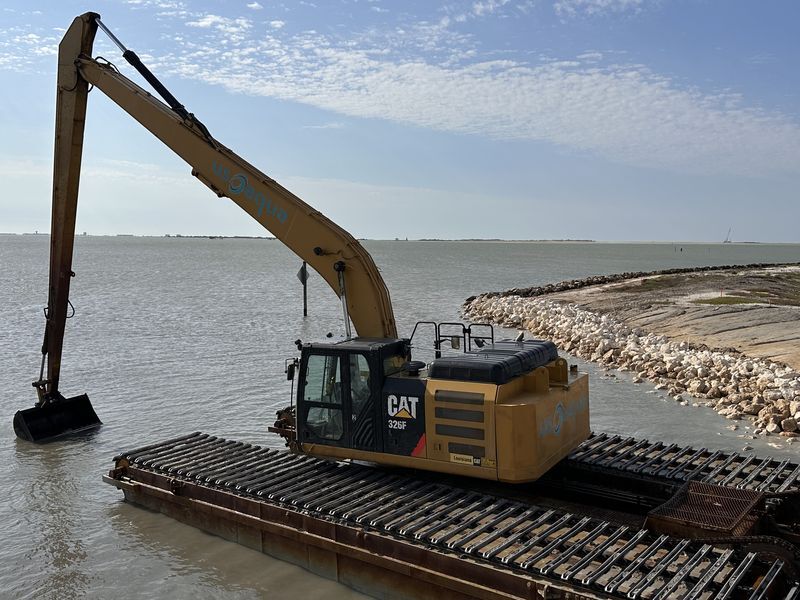
U.S. Aqua's marsh excavators operate on wide pontoon tracks that distribute weight across the surface, letting crews work in sensitive marshes, soft soils, and shallow water without destroying the surrounding ecosystem. Combined with submersible dredge pumps and beneficial use of dredged material, we rebuild habitat the way conservation agencies need it built.
Why Low-Impact Equipment Matters
Built to Protect the Environment It Works In
Low-Ground-Pressure Operation
Wide pontoon tracks distribute machine weight across a large surface area so equipment floats on soft soils instead of compacting or sinking. No permanent access scars. No destroyed vegetation.
Work Around the Ecosystem
Amphibious equipment reaches restoration areas through water rather than overland access roads. Project footprint stays contained to the work itself - the surrounding marsh and habitat remain undisturbed.
Wildlife-Conscious Scheduling
Our field superintendents coordinate work around nesting seasons, migratory windows, and permit restrictions that conservation agencies manage. Compliance documentation and daily reports are built into every project.
Frequently Asked Questions
Conservation & Wildlife FAQ
-
What conservation work does U.S. Aqua perform?
U.S. Aqua performs habitat restoration, marsh creation, ridge restoration, shoreline stabilization, and beneficial use of dredged material for conservation and wildlife agencies. Our amphibious equipment allows us to work in sensitive ecosystems without damaging the surrounding habitat. See our marsh and environmental restoration services.
-
Why is low-impact equipment important for habitat restoration?
Habitat restoration projects require equipment that can access soft soils, marshes, and shallow water without destroying the ecosystem the project is trying to protect. Conventional heavy equipment compacts soil, kills vegetation, and creates permanent access scars. Marsh excavators with wide pontoon tracks distribute weight across the surface, allowing operators to work without leaving lasting damage. This is critical for wildlife agencies, conservation groups, and federal habitat programs.
-
What types of habitats does U.S. Aqua restore?
U.S. Aqua restores coastal marshes, barrier islands, freshwater wetlands, ridge habitats, bird nesting colonies, waterfowl habitat, and shoreline ecosystems. Our work includes rebuilding eroded marsh, creating wetland terraces, restoring hydrology, placing beneficial use dredged material, and stabilizing shorelines with rock or sediment.
-
How does beneficial use of dredged material support conservation?
Beneficial use repurposes sediment removed during navigation dredging to rebuild marshes, create habitat, and stabilize shorelines - rather than disposing of it in open water. This single approach solves two problems: it keeps navigation channels clear while restoring coastal ecosystems that are actively disappearing. U.S. Aqua performs beneficial use projects for CPRA, USACE, and conservation organizations. Learn more about beneficial uses of dredged material.
-
Where does U.S. Aqua perform conservation work?
U.S. Aqua performs conservation and habitat restoration primarily across coastal Louisiana, Alabama, South Carolina, and Texas, including large-scale CPRA coastal master plan projects, Ducks Unlimited habitat work, and USFWS refuge restoration. Our headquarters in New Iberia, Louisiana and second office in York, Pennsylvania support conservation work across the Gulf Coast and Mid-Atlantic.