The Challenge
The Gulf Coast's Energy Infrastructure Runs Through the Marsh
Thousands of miles of oil and gas pipelines, natural gas gathering lines, high-voltage transmission corridors, and fiber optic routes cross the coastal marshes and wetlands of the Gulf Coast. Building, maintaining, and repairing this infrastructure in soft soils, shallow water, and environmentally sensitive terrain is a problem that conventional construction equipment and contractors are not equipped to solve.
Standard excavators sink. Access roads don't exist. Trenches flood the moment they're dug. Environmental permits restrict when and how you can work. Pipeline and energy companies need a contractor who operates in these conditions every day - not one that's figuring it out on the job.
Problems We Solve
What Makes Marsh Pipeline Work Different
The Problem
Right-of-Way Through Marsh
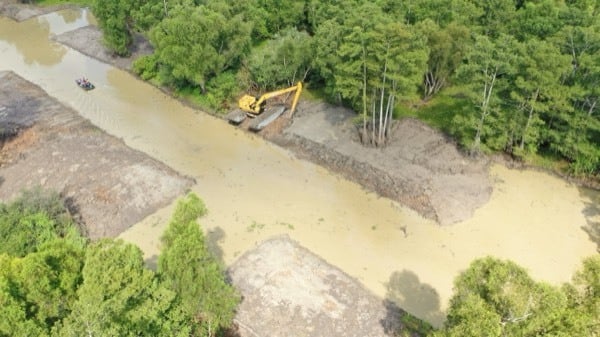
Pipeline corridors through coastal wetlands have no existing access. Vegetation, stumps, and debris must be cleared without conventional equipment and without destroying the surrounding marsh ecosystem.
How We Solve It
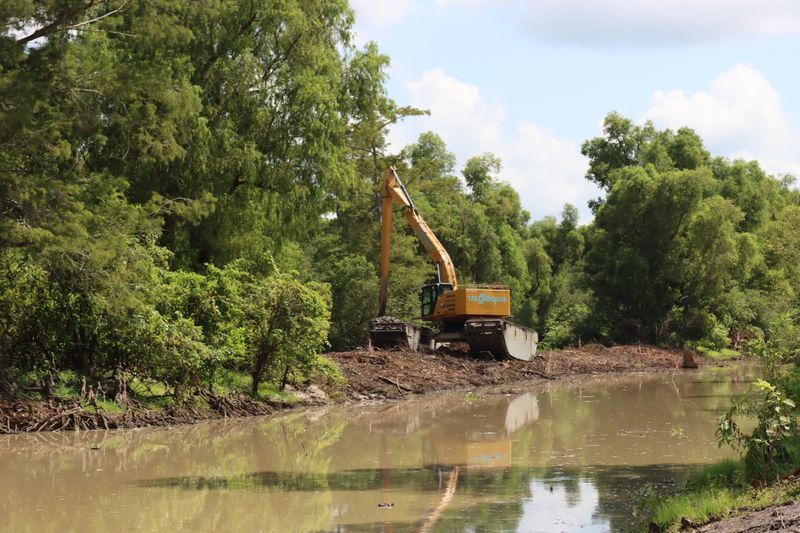
Our marsh excavators operate on soft soils and in shallow water, clearing ROW corridors while minimizing impact. We handle initial clearing, ongoing maintenance, and post-construction restoration.
The Problem
Trenching Through Wetlands
Pipeline trenches in saturated marsh soil flood immediately after excavation. Conventional trenching equipment cannot operate in these conditions, and the trench walls are unstable in soft material.
How We Solve It
Amphibious excavators dig and maintain the trench while operating in the same conditions. Submersible dredge pumps and jetting systems keep the trench workable until the pipe is positioned.
The Problem
Backfill & Restoration
After pipe positioning, the trench must be backfilled and the right-of-way restored to pre-construction condition. In marsh environments, material is saturated and difficult to control during placement.
How We Solve It
Our marsh excavators handle backfill placement and grading in the same soft soil conditions. Post-construction, we restore the ROW including vegetation and drainage to meet environmental permit requirements.
Related Services
How We Support the Energy Industry
Frequently Asked Questions
Energy & Pipeline FAQ
-
Why is pipeline construction in marshes and wetlands so difficult?
Coastal marshes and wetlands present extreme challenges for pipeline construction. Saturated soils cannot support conventional heavy equipment, which sinks under its own weight. Access routes do not exist - crews must build them as they go. Trenches flood immediately after excavation, requiring constant dewatering. Environmental regulations restrict the methods and timing of work. These factors make marsh pipeline projects significantly more complex and expensive than dry-land construction, and they require specialty equipment and operators who understand the conditions.
-
How does U.S. Aqua build pipelines through wetland environments?
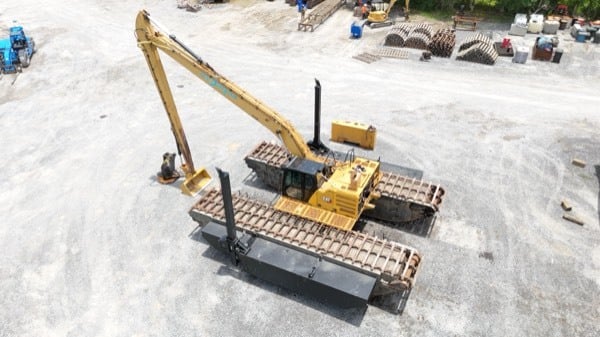
U.S. Aqua uses marsh excavators - amphibious machines with low-ground-pressure tracks that float on soft soils and operate in shallow water. These machines clear the right-of-way, excavate the pipeline trench, support pipe positioning, backfill the trench, and restore the corridor. Combined with submersible dredge pumps for dewatering and jetting, our fleet handles the full pipeline construction cycle without needing conventional equipment to access the site. See our guide on jetting, trenching, and dewatering for pipeline support.
-
What types of energy projects does U.S. Aqua support?
U.S. Aqua supports oil and gas pipeline construction (new builds, repairs, and removals), natural gas gathering and transmission lines, high-voltage electrical transmission line corridors, fiber optic and communication cable routes, and utility infrastructure projects. All of these require specialty equipment when the route crosses marsh, swamp, or wetland terrain - which is common across the Gulf Coast where much of the nation's energy infrastructure is concentrated.
-
Can U.S. Aqua handle right-of-way clearing and restoration?
Yes. U.S. Aqua performs the full right-of-way lifecycle - initial clearing before pipeline construction, ongoing maintenance during the operational life of the pipeline, and post-construction restoration to return the corridor to pre-construction condition. In marsh environments, ROW work requires amphibious equipment to clear vegetation, remove stumps, and grade the surface without destroying the surrounding wetland. Learn about the 9 different applications of marsh excavators.
-
Does U.S. Aqua work as a subcontractor to pipeline companies?
Yes. U.S. Aqua frequently subcontracts specialty scopes - amphibious excavation, ROW clearing in wetlands, trench excavation through marshes, and dewatering - to general contractors and pipeline companies managing larger energy projects. We also take on work as a prime contractor when the scope is primarily in our specialty environment. Contract vehicles include fixed-price, T&M, and subcontract arrangements.
-
Where does U.S. Aqua perform energy and pipeline work?
U.S. Aqua performs energy and pipeline work primarily across the Gulf Coast, with a concentration in coastal Louisiana where extensive oil and gas pipeline networks, transmission lines, and utility corridors cross marsh and wetland environments. Projects also extend to Texas, Alabama, and other Gulf Coast states. Our headquarters in New Iberia, Louisiana places us in the center of the Gulf Coast energy corridor.