
5 min read
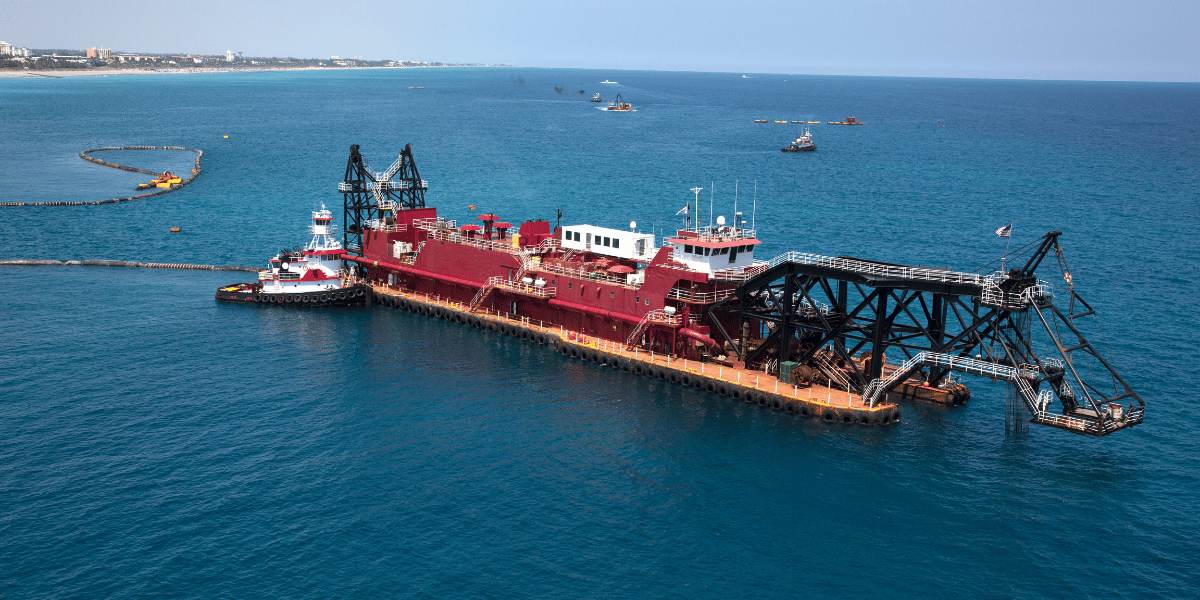
Deep-water trenching is a critical process in offshore pipeline installation, protecting vital infrastructure from environmental and human threats. In this guide, we'll explore its methods, equipment, and safety protocols to help you understand how to execute successful pipeline projects.
-
What Is Deep-Water Trenching and Why Is It Important for Offshore Pipeline Projects?
- How Do You Plan a Deep-Water Trenching Project for Pipelines?
- What Equipment Is Essential for Offshore Pipeline Trenching?
- What Safety Measures Are Critical in Deep-Water Trenching Operations?
- What Environmental Considerations Come Into Play During Subsea Trenching?

What Is Deep-Water Trenching and Why Is It Important for Offshore Pipeline Projects?
Deep-water trenching involves excavating a trench on the seabed to bury pipelines, shielding them from currents, anchors, and debris. This technique ensures pipeline stability and longevity in harsh marine environments.
Beyond protection, deep-water trenching aids in thermal insulation, buoyancy control, and regulatory compliance for navigation safety. For instance, in high-traffic areas or unstable seabeds, trenching prevents costly damage and downtime. According to industry standards from the American Bureau of Shipping (ABS), proper burial can mitigate risks from ice gouging or hydrodynamic forces in deep-water settings.
Real-world examples include oil and gas terminals where untrenched pipelines have suffered from anchor drags, leading to leaks and environmental hazards.
How Do You Plan a Deep-Water Trenching Project for Pipelines?
Planning a deep-water trenching project starts with defining the route, target burial depth, and surveys to assess seabed conditions. This ensures the pipeline is protected while minimizing environmental impact.
Key steps include:
- Conduct hydrographic, geophysical, and geotechnical surveys to map depths, soil types, and hazards.
- Analyze metocean data for waves, currents, and weather windows.
- Secure permits and issue navigation warnings.
- Select methods and equipment based on soil (e.g., sand vs. rock).
- Mobilize vessels and perform trial trenches.
- Execute trenching, lay the pipeline, and backfill.
- Complete as-built surveys and demobilize.
For example, in a coastal plant project, planning integrated nearshore excavators with offshore ploughs to handle varying soils, finishing within weather constraints. ABS guidelines emphasize expansion analysis and installation simulations to predict strains and ensure integrity.
What Are the Main Methods Used in Deep-Water Trenching?
Deep-water trenching methods vary by seabed type, water depth, and project needs, including jetting, ploughing, and mechanical cutting. These approaches can be pre-lay, simultaneous, or post-lay burial.
Choosing the right method optimizes efficiency, such as jetting for soft soils, mechanical for hard ones. Post-lay burial is popular as it allows pipeline placement first, reducing alignment risks.
What Is Water Jetting for Subsea Trenching?
Water jetting uses high-pressure jets to fluidize soil, allowing the pipeline to sink into the seabed. It's fast and efficient for loose sands and silts.
Pros include low fuel use and simple setup; cons are ineffectiveness in clays or gravel. In soft sediments, remotely operated vehicles (ROVs) with jets can achieve burial in deep water, as noted in subsea jet trenching reviews. A case in shallow sands showed jetting completing 3 km quickly with minimal disturbance.
.png?width=1200&height=600&name=A%20crew%20of%20workers%20wearing%20PPE%20on%20a%20dredging%20vessel%20in%20a%20harbor%2c%20using%20a%20hydraulic%20jetting%20unit%20to%20remove%20sediment%20from%20water%20in%20a%20harbor.%20(1).png)
How Does Plough Trenching Work for Pipelines?
Plough trenching employs a towed plough to cut V- or U-shaped trenches in the seabed. It's ideal for medium sands and clays on straight routes.
This method offers high productivity and depth control but requires clear seabeds and powerful vessels. In ice-prone areas, ploughs enhance stability against gouging. Examples from North Sea projects demonstrate ploughs burying pipelines efficiently over long distances.
What Role Do Mechanical Chain Trenchers Play in Offshore Projects?
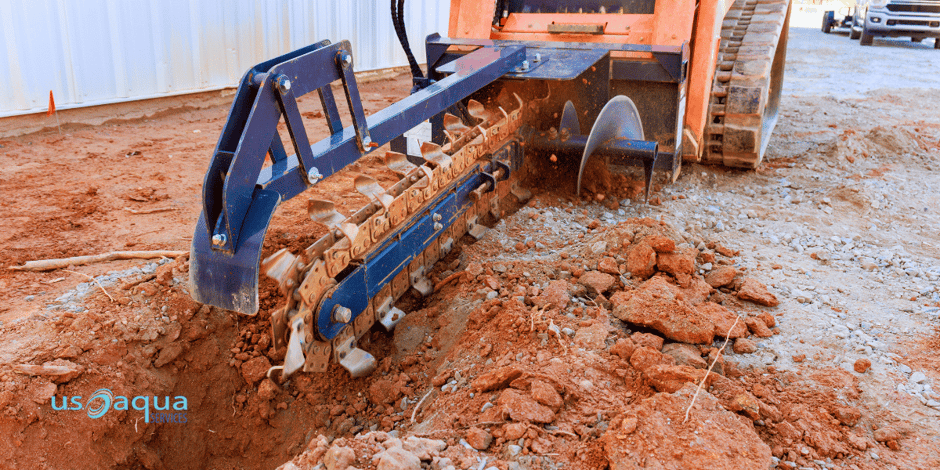
Mechanical chain trenchers are tracked vehicles that dig using rotating chains or wheels. They provide precise cuts in stiff clays, cemented sands, and soft rock.
While slower with higher maintenance, they excel in control and stability. In rocky seabeds, they outperform jetting, as seen in cemented layer handling during intake pipeline installations.
When Should You Use Dredger-Based Trenching Nearshore?
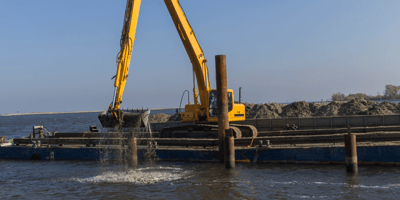
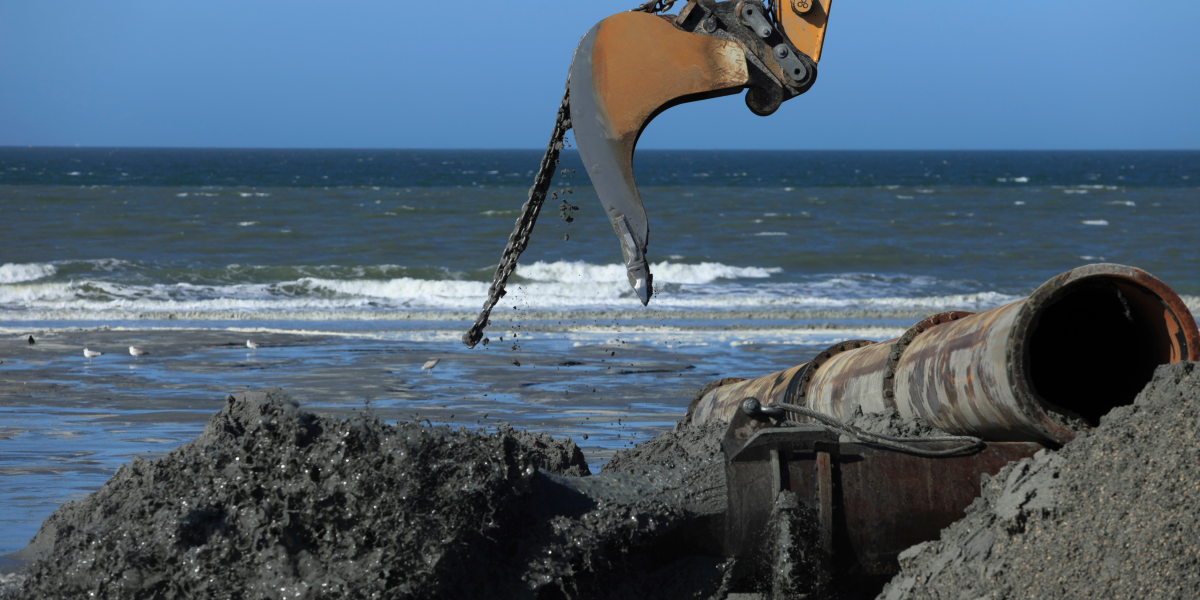
Dredger-based trenching uses excavators on barges or cutter suction dredgers for shallow zones like beaches and ports. It's suited for nearshore where towed gear is impractical.
Limitations include weather sensitivity in surf zones. A twin pipeline project used this for beach approaches, transitioning to offshore methods.
How Is Rock Trenching Handled in Hard Seabed Conditions?
Rock trenching involves mechanical cutters, picks, or controlled blasting for hard rock. It's essential for ridges or lenses but time-consuming and permit-heavy.
Best practices include strict surveys to minimize blasting. In hard grounds, this ensures burial where other methods fail.
What Equipment Is Essential for Offshore Pipeline Trenching?
Essential equipment for offshore pipeline trenching includes lay barges, ROVs, ploughs, jet sleds, and survey vessels. These tools enable precise burial in subsea environments.
|
Equipment Type |
Description |
Best For |
|
Pipeline Lay Barge/Vessel |
Lays and positions pipelines |
All depths |
|
Jet Sled/Plough/Trencher Units |
Cuts trenches via jetting, ploughing, or mechanical means |
Soil-specific methods |
|
ROVs and Divers |
Inspects and adjusts underwater |
Deep-water precision |
|
Support Barge |
Houses workshops and spares |
Maintenance |
|
Survey Boat with Sonar/GPS |
Maps and monitors progress |
Accuracy |
|
Silt Curtains/Turbidity Screens |
Controls sediment spread |
Environmental protection |
What Safety Measures Are Critical in Deep-Water Trenching Operations?
Critical safety measures in deep-water trenching include risk assessments, weather monitoring, and emergency plans to protect crews and assets. These prevent incidents in challenging offshore conditions.
Checklist:
- Before Start: Approve permits, check weather/tides, inspect gear, prepare spill kits.
- During Work: Maintain safe zones, avoid manual handling near wires, stop for poor visibility or swells.
- After Shift: Isolate equipment, record incidents, brief teams.
ABS requires safety devices like pressure sensors and shutdown valves. Real examples show adherence reducing risks from vessel traffic or equipment failure.
What Environmental Considerations Come Into Play During Subsea Trenching?
Environmental considerations in subsea trenching involve minimizing turbidity, protecting habitats, and monitoring water quality. This ensures sustainable operations.
Use silt curtains near shores, avoid sensitive areas like corals, and engage communities. Baseline surveys guide spoil placement. In desalination projects, these steps maintained compliance with low turbidity impacts.
Ready to Execute Your Deep-Water Trenching Project with Confidence?
Deep-water trenching protects offshore pipelines from environmental hazards, ensures long-term integrity, and meets regulatory requirements. By choosing the right methods, equipment, and safety protocols, project teams achieve precise, cost-effective, and environmentally responsible results.
At U.S. Aqua Services, we deliver specialized dredging, jetting, trenching solutions, and rapid-response support for offshore pipeline projects across the Gulf Coast and nationwide. With over 100 years of combined experience, our team provides reliable equipment and proven expertise to keep your installation, repair, or maintenance project on schedule and protected.
Contact U.S. Aqua Services today to discuss how our pipeline support solutions can drive success on your next deep-water initiative.

Related Articles
The Importance Of Dredging - In this blog post, we will discuss the importance of dredging and some of its benefits.
Dredging For Environmental Remediation - This article will explain the importance of environmental dredging as well its benefits while discussing several different techniques used today.
5 Technological Advancements We're Excited to See More of in 2023 - Here are the top five technological advancements that will make waves in the dredging and construction industry in 2023.
About U.S. Aqua Services
U.S. Aqua Services was created to support the dredging process in advancing commerce and responding to its many challenges. To accomplish this, our dredging company assembled an exceptional group of experienced individuals and a diverse inventory of dredge equipment.
We offer dredging equipment rental services so you can have access to the latest and greatest in dredging technology without having to pay to maintain it, transport, and store it, along with dewatering services.
With an emphasis on mobility, dependability, durability, diversity, efficiency, and safety, our dredging rental company can ensure that our different types of dredging systems are easy to move through any terrain and can work in the most rugged and remote environments. Our multi-function hydraulic systems are built with jetting and mechanical options that can efficiently move loose sediment or stiff layers of clay.
US Aqua services also and maintains a ready fleet of amphibious equipment capable of completing dredging projects in some of the harshest and most remote environments. U.S Aqua is also the dealer for Louisiana of the amphibious vehicle Fat Truck. No matter the size or scope of the job or the remoteness of your work location, you can rely on Fat Truck’s industrial off-road utility vehicles to get the job done right.
%20(1).png?width=400&height=225&name=A%20large%20boat%20with%20dredging%20equipment%20in%20a%20large%20channel%20of%20water%20clearing%20sediment%2c%20powered%20by%20U.S.%20Aqua%20(2)%20(1).png)
.png?width=400&height=225&name=A%20yellow%20excavator%20and%20a%20dump%20truck%20at%20an%20industrial%20construction%20site%20near%20a%20body%20of%20water%20using%20a%20marsh%20buggy%20provided%20by%20U.S.%20Aqua%20(1).png)